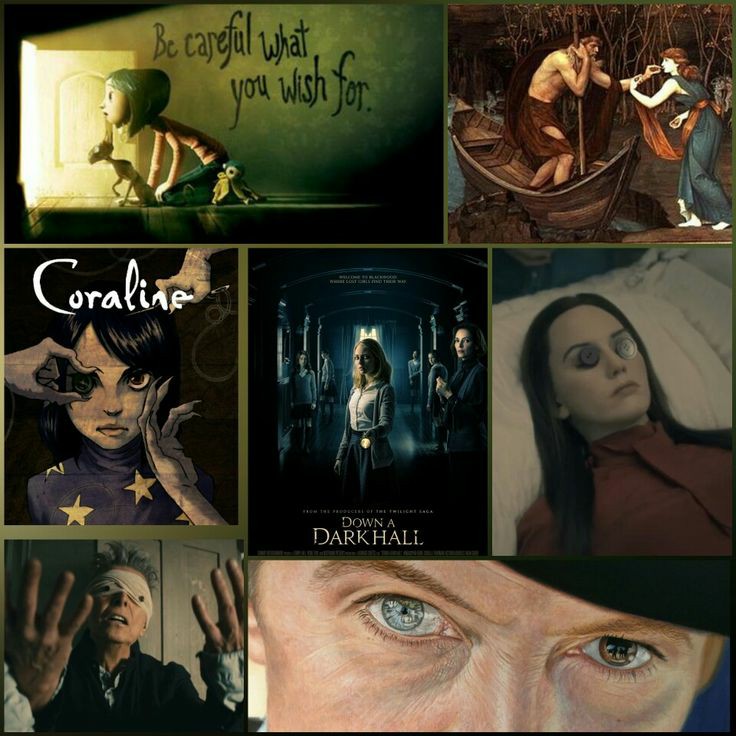
The "Goblin Self" is a term that intuitively captures a particular mode of archetypal energy—one that disrupts, confounds, and ultimately refines. It is the mischievous, shadow-cloaked aspect of the Higher Self, the Daemon in its trickster manifestation. Unlike the guiding voice of serene wisdom often attributed to the Holy Guardian Angel, the Goblin Self takes a more chaotic approach to initiation, embodying a playful yet ruthless wisdom. It tricks, teases, and misdirects—not to lead astray, but to force a confrontation with one's own illusions. Like a tricky leprechaun or the Goblin King in Labyrinth, it seduces with riddles and temptations, leading seekers through a maze of their own projections until they recognize that the real power has always resided within.
Text passage via Sepher Sapphires
The Goblin Self resonates with the liminal energies of the Mauve Zone, that surreal borderland where consciousness dissolves into alien transmissions and dreamlike initiatory states. This is the territory of the Daemon as an unpredictable, alien intelligence—a force that often unsettles and destabilizes. The Goblin Self, in this sense, serves as an emissary of the Outer Gateways, those interstitial spaces between waking and dreaming, Self and Other. The Goblin Self upends expectations, forcing the magician into initiatory crises that reveal hidden layers of reality. Like the darkly radiant intelligences of the Nightside, it tempts with glamour only to strip away delusions in a way that no gentle illumination could.
The Outer Gateways are entry points between everyday reality and the hidden side of consciousness, where strange forces, mysterious beings, and deep transformations challenge ordinary perception.
Lost Records: Bloom and Rage
The concept of the Daemon (daimon) is multifaceted. The Agathodaimon represents a guiding force toward higher wisdom, while the Kakodaimon embodies chaos and misdirection—both aspects ultimately serving the same initiatory purpose. Choronzon, the chaotic demon of the Abyss, plays a similar role. Choronzon is not a mere adversary but the principle of dissolution, the force that breaks down egoic constructs (Death, The Tower) before reintegration can occur. He is the whispering trickster at the threshold, the shadow side of the Holy Guardian Angel, tempting with illusions of power and identity. This aligns with Daath, the sephira that is naught, which acts as a portal into the Qliphoth, the realm of husks and shadows. Daath is both the abyss and the key to transcending it—where knowledge must be surrendered for wisdom to emerge. The Goblin Self plays in this same space, pulling strings from the unseen, orchestrating tangible and intangible 'events', unsettling the mind's attachments, and forcing the surrender necessary for transformation.
Daath and Yesod share an intricate relationship in this framework. Yesod, the foundation, is the gateway of the subconscious, the dream realm where archetypes take form. It is the astral plane of illusions and raw psychic material, where one can become trapped in fantasies or use them as stepping stones to deeper wisdom. Daath, on the other hand, is the hidden knowledge that stands at the abyss, a transitional point where intellect can no longer sustain itself and something deeper must take over. It is the throat of the Tree of Life, the gate where dissolution begins.
Choronzon and the Tree of Life illustrate how this force challenges those who seek deeper knowledge, forcing them to relinquish their attachments. In a sense, Yesod is the reflection of the unconscious mind, while Daath is the trapdoor that, when opened, can lead to initiatory madness and/or transcendence. To engage with the Goblin Self is to navigate this tricky terrain, to court chaos with the understanding that only through disorientation can one reorient toward true gnosis.
Lost Records: Bloom and Rage
"Every hurt is a lesson, and every lesson makes you better." - George RR Martin, A Game of Thrones
Thus, to embrace the Goblin Self is to enter the initiatory maze, where every trick conceals a lesson and every apparent setback is an occulted gift. This is the Daemon in play, the sacred mischief that reshapes reality not by brute force, but through the alchemy of paradox and manipulation. It is the whisper in dreams, the uncanny coincidence, the symbolic pattern that appears just as one is about to stray too far from their path. Choronzon meditation techniques can reveal these hidden layers of self, stripping away illusions through guided exploration of the Abyss. To follow the Goblin Self is not to a-void suffering, but to dance with it—to learn through jest, to be dismantled in riddles, to be led astray so profoundly that one can never again mistake illusion for truth. And therein lies its gift: The revelation that the labyrinth, the mask, was always of one's own making, and that the way out is through the very trickery one sought to escape.
You find yourself in liminal space, the no-place between what was and what will be. You have come to a crossroads, the threshold between worlds. A space where the ordinary, the known, dissolves into the extraordinary, the unknown. This is a realm of all-possibility.
A choice point has been reached. It is both a call to action and a call to surrender. Regardless of which path you choose, transformation is inevitable. Trust in the underlying currents tugging forward, those little nudges from your intuition as they silently guide you.
Along this cusp of non-being, one should expect to encounter figures who embody the archetype of the trickster, serving as teachers in disguise. These are not external mentors but projections and embodiments of the Self's shadow—those hidden, suppressed, or repressed fragments that remain unexamined or rejected.
The trickster-teacher's lessons are unsettling yet invaluable, compelling the individual to confront the depths of their psyche. These lessons serve not only to answer your burning questions, but also to help you to discover the deeper questions you haven't yet thought to ask.
This crossroads is not merely a place of choice but a crucible for alchemical change. To engage with these shadows is to integrate the disowned aspects of the Self, a process necessary for reaching authenticity and spiritual growth. The traveler on this path discovers that what was once feared or dismissed holds the key to wholeness.
Choronzon, often called the "Dweller in the Abyss," is a perfect example of a trickster-teacher you might face on your spiritual journey. He's not just there to mess with you—though it can feel like that—but to challenge you by throwing illusions and distractions your way. What 'he's' really doing is holding up a mirror to your own fears, doubts, and fragmented sense of self. If you face and engage him, you're pushed to face your inner chaos and break through the limits of your ego. Ultimately, his seemingly insidious brand of 'tough love' forces you to level up spiritually.
In your everyday life, these trickster figures manifest not as fantastical beings but through the circumstances, challenges, and people you encounter—especially during times of upheaval (The Towertarot card comes to mind) or uncertainty. A health crisis might force you to confront your vulnerability, unresolved fears, or neglected self-care, becoming a wake-up call to realign your life. Being deceived by others or experiencing betrayal might shatter illusions of trust or control, compelling you to examine your boundaries and discernment. Relationships ending, or even the loss of a loved one, can catalyze profound growth by forcing you to reconcile with impermanence and explore what truly matters.
"The soul needs an outer drama that can help awaken and pull into conscious awareness the inner myth and seeded story it carries within."
These experiences act as externalized projections of the inner myth you carry—the story seeded deep within your soul that longs to be brought into conscious awareness. As the quote suggests, "The soul needs an outer drama that can help awaken and pull into conscious awareness the inner myth and seeded story it carries within." The events that unfold in your life serve as this outer drama, a symbolic theater designed to awaken you to deeper truths about yourself.
In these moments, you are between the past and the future. The people around you may seem to 👂 "come out of the woodwork" to deceive, challenge, or provoke you—not because they are inherently adversarial, but because they embody aspects of your shadow self (projection) that you've yet to acknowledge. Their behaviors reflect unintegrated aspects of your inner world, inviting you to explore your unconscious patterns and unearth the hidden wisdom they contain.
"Maybe the North Star doesn't indicate north. Maybe the mapmaker was drunk. Maybe the moon's made out of cheese. Who knows?! Who knows? Everything is so fucked up on this goddamn road!" - Dead End movie (2003)
The Underworld (implicate/subconsciousness and super-implicate/super-consciousness orders) represents a zone where established constructs (maps) break down. This dissolution reflects the experience of encountering paradoxes, illusions, and "negative existence" where conventional logic fails. This chaos is necessary for transformation, compelling the soul to rely on inner guidance rather than external reference points. Both peril (PiT) and illumination (TiP, garden) are found in these depths (which are also heights).
If Yesod is the Door, Daath is the Key
Janus, the Roman God of Transitions—often associated with Chokmah (Wisdom) and Daath (Knowledge)
The deformed little guys underneath Janus remind me of Kuato (a conjoined TWIN, like Janus) from Total Recall.
Kuato and George, Total Recall
Janus, often depicted with two faces looking in opposite directions, reflects Daath’s dual function as both a gateway and a veil. Daath occupies the threshold between the Supernal Triad and the lower Sephiroth, connecting the divine and the manifest realms. Its dual aspect embodies both creation and dissolution, beginnings and endings. This aligns with Janus' role as the guardian of thresholds.
Daath symbolizes the knowledge or "key" required to traverse the Abyss, representing an initiatory transition (crossroads) from ignorance to enlightenment, or from fragmented perception to holistic awareness. Daath, meaning "knowledge," is not academic (lifeless) intellectual understanding but, rather, the experiential awareness that opens the path to higher consciousness. Janus, as the god of thresholds, embodies the act of stepping into a new state of being, requiring the wisdom (or key) to unlock the door.
The Particle (Persephone/Kore) and The Wave (Pluto/Hades)
Janus symbolizes the interplay between Persephone (Kore) as the Particle and Pluto (Hades) as the Wave. One face of Janus represents Persephone, the embodiment of form, matter, and life cycles, aligning with the Qabalistic sphere of Malkuth (Kingdom), where the material world takes shape. The other face reflects Pluto, the archetype of chaos, transformation, and dissolution, associated with Daath (Knowledge), the mysterious gateway bridging unity (singularity) and duality (polarity).
Positioned on the Abyss, Daath represents a space where opposites converge, requiring the seeker to reconcile unity and multiplicity, form and void.
True Detective, S1E8 "Form and Void"
Yesod, as the Foundation, mirrors Daath but functions on a different plane. While Daath serves as the gateway to higher realms of divine unity, Yesod operates as the threshold to the astral plane and the physical world. It consolidates and channels energies from the higher Sephiroth, shaping them into forms accessible in Malkuth. This intermediary role parallels the function of a doorway, both separating and connecting realms. Doorways (like the crossroads) symbolize choices and transitions, and Yesod serves as the space where archetypal energies are organized and projected into the material plane.
The Lovers - also known as "The Choice"
The Lovers card encapsulates the profound moment of choice, a pivotal crossroads where one must discern the path to follow. Rooted in the energy of Zayin, "the sword," this choice is sharp and decisive, cutting through illusion to reveal truth. It reflects Gemini's duality, symbolizing both the discernment necessary to separate (Cancer) opposites and the alchemical conjunction that unifies them into a harmonious whole. This card calls one to reconcile the dichotomies within—the conscious and subconscious, masculine and feminine, inner and outer. (Alchemical fixation.) Just as a sword divides, it also symbolizes the precision and clarity needed to choose wisely, emphasizing that through discernment, unity and higher integration become possible.
Yesod's correspondence to the astral plane reinforces its role as a liminal space. Here, dreams, symbols, and archetypal forms interact with the waking world. This reflects the deeper duality inherent in transitions, where the unseen and seen are bridged. Like Janus' forward and backward gaze, Yesod embodies the reflective nature of thresholds, managing the interface where potential becomes actual.
Yesod can be understood through its many symbolic attributes, which include mirrors, perception, secret doors, hidden passages, tunnels, psychism, the interface between dimensions, the assemblage point, imagination, image and appearance, the unconscious, dreams, illusions, sex and reproduction, magic, and instinct.
Dark Matter
The Qlippoth
The Qlippoth are the "husks" or "shells," representing the shadow side of creation (or Universe B). They mirror the sephiroth but invert their divine energies, embodying chaos, disintegration, and the raw power of unrefined matter. In exploring the Underworld, one must confront the Qlippothic energies—fragmented aspects of the self that hold keys to transformation when engaged with intention and awareness. The Qlippoth represent the shattered forms that must be reintegrated to move toward wholeness.
Update:
10:57AM CST on 1/16/2025
Shortly after publishing this post, while I was doing some cleaning, some synchronistic messages began to come through while YouTube was autoplaying various YouTube videos based on/from my subscriptions. Currently, the energetic themes that I am seeing recycling through are reminiscent of patterns noticed around July 17th, 2024, mid-to-late August of 2024, and end of October-mid December of 2024. I emphasize the October-December energy, because that's when the whole The Tower and crossroads themes really and truly began to take the stage for the latter half of the year.
The Tower...WILL fall. Backtrack🚆 all you want, but the flames of transformation are rekindling. This karmic cycle needs to come to a close, and you're at a crossroads. Drop the baggage and carry-on ✈️, move along.
Element: Earth Astrological Sign: Virgo Planet: Mercury Hebrew Letter: Yod (י) Kabbalistic Path: Path 20 (Chesed to Tiphareth) Numerology: 9 (Completion, wisdom, introspection) Archetype: The Sage, The Wise Guide
Symbols:
Lantern and Six-Pointed Star: The Hermit’s lantern holds a six-pointed star, representing wisdom, divine light, and guidance. The light he carries symbolizes the inner knowledge that illuminates the path of truth for both himself and others, showing that wisdom gained through solitude is meant to be shared.
Staff: The staff is a symbol of support, representing the willpower and inner authority of The Hermit. It suggests spiritual mastery and the strength to continue the journey of self-discovery, reminding us that wisdom is not passive but actively cultivated.
Mountain Peak: The Hermit stands on a mountain, symbolizing spiritual elevation, the summit of knowledge, and solitude at the heights of self-realization. The mountain represents the challenges overcome through inner work and the isolation necessary to reach higher consciousness.
Gray Robe: The gray cloak of The Hermit symbolizes the wisdom gained through balancing light and darkness. It represents neutrality and detachment from worldly distractions, as well as the concealed mysteries the Hermit embodies.
Yod (י): The smallest letter of the Hebrew alphabet, Yod symbolizes divine essence, humility, and the spark of creation. It indicates the purity of The Hermit’s mission to seek higher truth and connect with the divine through introspection.
Keywords:
Upright: Inner wisdom, introspection, solitude, spiritual guidance, self-reflection, enlightenment, seeking truth, personal growth, retreat from distractions.
Reversed: Isolation, loneliness, withdrawal, misdirection, fear of facing inner truths, avoidance of introspection, loss of purpose.
Video Transcription:
"The Hermit card in Tarot represents introspection, inner wisdom, and solitude. It’s about stepping away from the external world to find truth and guidance within yourself. The figure of the Hermit carries a lantern, symbolizing the light of inner wisdom that illuminates the path for both himself and others. Often associated with Virgo and the Hebrew letter Yod, this card embodies the quiet process of self-discovery and spiritual growth.
Saturn, sometimes linked to The Hermit, brings a deeper layer of understanding. Saturn is known for its restricting and isolating energy, but this is not a punishment. Instead, these limitations encourage us to turn inward. By isolating us from distractions, Saturn's influence allows for deep reflection, forcing us to cultivate our spiritual gifts and understand our life's purpose. This period of restriction offers the opportunity for profound inner work, fostering growth that can only come through such introspection and seclusion."
Element: Fire Astrological Sign: Leo Planet: Sun Hebrew Letter: Teth (ט) Kabbalistic Path: Path 19 (Chesed to Geburah) Numerology: 8 (Strength, balance, power, infinity) Archetype: The Healer, The Compassionate Leader
Symbols -
- Woman and Lion: The woman represents calm control, purity, and higher consciousness, while the lion symbolizes primal instincts, desires, and the untamed aspects of human nature. Their interaction symbolizes the mastery of the higher self over base desires through compassion, not force.
- Infinity Symbol (Lemniscate): Floating above the woman's head, it symbolizes eternal balance, infinite potential, and mastery of both spiritual and physical realms, connecting Strength to the infinite flow of energy between the conscious and subconscious mind.
- White Robe: The purity and divine connection of the woman, indicating that her strength comes from a place of spiritual wisdom and inner clarity.
- Chain of Flowers: The gentle and harmonious control over the lion through love and understanding, symbolizing the power of gentleness and inner strength over brute force.
- Mountains in the Background: Represent challenges, aspirations, and spiritual attainment. They indicate that the woman’s strength is drawn from overcoming difficulties and reaching higher states of consciousness.
- Green Field: Symbolizes fertility, growth, and the harmonious connection to nature, suggesting that true strength aligns with the natural flow of life, embodying the energies of love and compassion.
Keywords -
Upright: Courage, compassion, inner strength, self-control, influence through gentleness, harmony between higher and lower selves, overcoming adversity with patience and love.
Reversed: Self-doubt, weakness, loss of confidence, imbalance between instincts and higher self, suppressed emotions, lack of courage.
Video Transcription:
"The Strength tarot card is a powerful symbol of inner control and balance between our higher self and our more primal instincts. It depicts a woman gently controlling a lion, representing our ability to tame and harmonize our lower nature with our higher, spiritual nature. This card reminds us that true strength comes not from force but from compassion, patience, and understanding.
Astrologically, Strength is associated with Leo, symbolizing vitality, courage, and leadership. The card invites us to connect with both our passions and our self-discipline. When these forces are united, they empower us with resilience and calm control over life’s challenges.
The Hebrew letter Teth, meaning "serpent," corresponds to this card, representing wisdom and the flow of life force, known as Kundalini, which rises when we master the balance between our physical and spiritual selves—granted only via the Merits of the Heart."
Element: Water Planet: Moon (Jupiter exalted in Cancer) Astrological Sign: Cancer Hebrew Letter: Cheth (ח) Kabbalistic Path: Path 18 (Binah to Geburah) Numerology: 7 (Victory, mastery, willpower, control) Archetype: The Warrior, The Conqueror
Symbols -
Sphinxes (Black and White): Symbolize duality, opposites, and the balance of forces—light and dark, conscious and unconscious, good and evil—that the Charioteer must harmonize to progress. Armor: Protection, both physically and spiritually, representing defense and strength accumulated from past struggles. Disk on Armor with Metatron's Cube: Signifies sacred geometry, cosmic order, and the connection to the One Self, a higher power guiding the Charioteer. Starry Canopy: Represents celestial influence and the guidance of higher forces, as well as the role of destiny and cosmic will. Chariot (Cube Shape): Represents physical manifestation, stability, and the structure of the material world, balanced with the divine. River and Trees: Link to the flow of emotions and fertility, connecting the Chariot with natural growth and subconscious waters, a mix of The High Priestess and The Empress influences. Crescent Moons on Shoulders: Symbolize the rulership of the Moon over Cancer, highlighting intuition, emotions, and cycles. Wand (or Scepter): The Charioteer’s control and mastery over his journey, representing focused willpower.
Keywords -
Upright: Willpower, determination, control, victory, forward movement, mastery over conflicting forces, drive, spiritual progress. Reversed: Lack of direction, loss of control, chaos, stagnation, scattered energy, being overwhelmed by opposing forces.
Video Transcription:
"The Chariot, Key VII, symbolizes triumph through willpower and determination. Depicted as a warrior guided by two sphinxes—balancing opposing forces—it represents victory through discipline and mastery over conflict. The charioteer’s armor bears alchemical symbols, including Metatron’s Cube, linking this card to the One Self and transformation from past experiences.
Astrologically tied to Cancer, ruled by the Moon, it reflects emotional depth and protection. The Hebrew letter Cheth (ח), meaning “fence,” evokes boundaries and the cultivation of the inner world. The chariot represents not just physical motion but a spiritual journey.
Ultimately, The Chariot teaches that true victory comes from aligning will with purpose, maintaining balance, and using past disappointments and losses as mission fuel, applying learned lessons to overcome future challenges."
Element: Air Astrological Sign: Gemini Planet: Mercury Hebrew Letter: Zayin (ז) Kabbalistic Path: Path 17 (Binah to Tiphareth) Numerology: 6 (Harmony, Union, Choice, Reciprocity) Archetype: The Lovers, the Union of Opposites
Symbols
- Angel Raphael: Represents super-consciousness and divine guidance, overseeing the union of opposites and blessing the connection between the figures below.
- Adam and Eve: Symbolize the conscious and subconscious minds, and the union of opposites. Adam represents self-consciousness (reason), while Eve represents the subconscious (intuition and emotion).
- The Mountain: A symbol of aspiration and spiritual growth, representing the challenges of attaining a higher state of understanding and the ultimate union of opposites, resulting in super-consciousness.
- Tree of Knowledge (Eve’s side): Represents wisdom and the knowledge of good and evil. The five fruits symbolize the five senses, which guide human experience.
- Tree of Life (Adam’s side): Symbolizes the zodiac with its twelve fruits, representing the cosmic forces that influence the individual and the world.
- Serpent: Signifies temptation, wisdom, and the force of kundalini energy, urging humanity toward experience and growth through choice and self-awareness.
- The Sun: The source of life and enlightenment, representing clarity, vitality, and the life force animating all creation.
- Nudity of Adam and Eve: Suggests vulnerability, innocence, and the unhidden nature of truth when it comes to love and union.
Keywords
Upright: Love, harmony, relationships, choices, alignment of values, union, integration, emotional balance, personal growth.
Reversed: Disharmony, imbalance, misalignment of values, indecision, conflict, separation, confusion in relationships, difficult choices.
Video Transcription:
"The Lovers tarot card, Key 6, represents harmony, choice, and the union of opposites. It highlights the dynamics between dualities, whether in relationships or within oneself. Ruled by Gemini, the card emphasizes the importance of understanding and balancing contrasting forces, such as intellect and emotion, or spiritual and physical desires.
Zayin, the Hebrew letter associated with this card, means "sword" and signifies the power of discernment and cutting through illusions to perceive the truth clearly.
In the imagery, Adam and Eve represent the conscious and subconscious aspects of the mind. Raphael, the angel, symbolizes higher guidance, overseeing the union of these two forces. The mountain in the background suggests spiritual ascent, while the trees behind Adam and Eve represent knowledge and life. The tree of knowledge, with its five fruits, corresponds to the five senses, and the serpent represents wisdom and temptation."
Element: Earth Planet: Venus Astrological Sign: Taurus Hebrew Letter: Vav (ו) Kabbalistic Path: Path 16 (Chokmah to Chesed) Numerology: 5 (Adaptation, Learning, Expansion, Unity through Knowledge) Archetype: The Spiritual Teacher, The Bridge-Maker, The Still Small Voice Within, Voice of Thy Father
Symbols -
Triple Crown (Tiara): Represents spiritual authority and mastery over the three realms (physical, mental, and spiritual). Pillars: Symbolize stability, tradition, and the balance of opposing forces, mirroring the duality seen in other cards like The High Priestess. Crossed Keys: Represent the balance of subconscious (silver key) and superconscious (golden key), and the unlocking of higher wisdom. Throne: His stone seat symbolizes wisdom and permanence, drawing a connection to the second Sephirah, Chokmah (Wisdom). Yoke Hanging Behind Ears: Symbol of connection and union (Vav), highlighting the spiritual responsibility to guide others. Red Robe and Blue-Green Trim: Taurus (Earth) governs practical spiritual teaching, while the complementary blue-green hints at Scorpio, the opposite sign, for inner transformation. Tonsured Monks: Represent learning, devotion, and the harmony between mind (thought) and heart (desire).
Keywords -
Upright: Spiritual guidance, tradition, established beliefs, moral values, teacher-student relationships, conformity, inner wisdom. Reversed: Rebellion against tradition, unorthodox views, spiritual hypocrisy, rigid beliefs, dogma, closed-mindedness.
Video Transcription:
"The Hierophant, Key 5 in Tarot, symbolizes the bridge between the earthly and the divine, merging tradition with inner spiritual insight. Linked to the Hebrew letter Vav—meaning "nail" or "hook"—it emphasizes the concept of connection, whether between people or between the physical and spiritual realms. Traditionally portrayed as a religious figure like a pope, The Hierophant represents formalized knowledge, education, and external spiritual authority.
However, beyond this exoteric meaning lies the deeper, esoteric role of the pontifex or "bridge-maker," guiding the seeker to inner illumination. This reflects the idea that true wisdom is found through both external learning and internal revelation, aligning the personal with the universal. Astrologically connected to Taurus, the card carries themes of stability, tradition, and the material world, yet points to the potential for inner awakening and the embodiment of divine consciousness—whether as Christ or Buddha."
"The High Priestess represents the stillness of the subconscious mind, a feminine force in balance with the masculine Magician. She is the gatekeeper between the conscious and the hidden mysteries, depicted as seated between two pillars, Jachin and Boaz, symbols of polarity and the dual nature of the universe—light and dark, passive and active. The letter Gimel, linked with the Priestess, signifies a camel, which travels across the vast desert of the Abyss, the space of unknown knowledge and intuition.
Her scroll, the Tora, suggests an understanding of natural laws and cosmic cycles, while her connection to the Moon reflects the fluidity of inner truths, receptive to the cycles of consciousness, waxing and waning like lunar phases. The path she represents on the Tree of Life—Path 13—bridges the known and the unknown, leading toward Daath, the hidden sephira of knowledge.
In her purity, she mirrors the forces of creation before they take form, holding the energy of all possibility. She sits in stillness, poised between potential and manifestation, waiting to reflect what is projected into her."
Element: Air (also tied to Mercury) Planet: Mercury Astrological Sign: Gemini and Virgo Hebrew Letter: Beth (ב) Kabbalistic Path: Path 12 (Kether to Binah) Numerology: 1 (Beginnings, Will, Manifestation) Archetype: The Creator, The Alchemist
Symbols -
Wand (pointing upward): Channeling divine energy. Hand (pointing downward): Directing that energy into the material world (As Above, So Below). Table with Tools: Represents mastery over the four elements—Fire (wand), Water (cup), Air (sword), and Earth (pentacle). Red and White Robes: Balance of passion (red) and purity (white), embodying both action and divine intent. Serpent Belt: Eternity and regeneration, the infinite cycle. Garden of Flowers: Blossoming potential, conscious creation in the material realm. Lemniscate (infinity symbol above the head): Infinite power, wisdom, and potential. Yellow Background: Consciousness, intellect, clarity, and enlightenment.
"The Magician stands as the embodiment of conscious creation, wielding forces both seen and unseen. His raised hand touches the infinite, while the other channels that energy into the world of form. This is not just a gesture—it’s an alchemical process, turning the subtle into the solid.
Before him lie four sacred tools, not just for the elements, but as keys to unlock reality itself. Each object is a symbol, a doorway: The wand for will, the cup for emotion, the sword for mind, and the pentacle for the body. Together, they offer mastery over the layers of existence, from the mental to the material.
Above him, the lemniscate is a reminder of the cycles that bind all things—creation and dissolution, expansion and contraction. The Magician is not just a channel, but the weaver of these cycles, bending them to his intent. Mercury’s presence signifies that true power is fluid and must be wielded with precision, turning thought into form with purpose and clarity. The Magician’s path is the mastery of manifestation."
Element: Air Planet: Uranus Astrological Sign: Aquarius Hebrew Letter: Aleph (א) Kabbalistic Path: Path 11 (Chokmah to Kether) Numerology: 0 (Potential, Boundlessness, Beginnings) Archetype: The Innocent, The Wanderer
Symbols -
White Rose: Purity and innocence. Bag on Staff: Carrying wisdom, life experiences. Dog: Instinct, protection, loyalty. Cliff: Risk, uncertainty. Mountains: The journey ahead, challenges in the distance, pregnant with potential. Feather in Cap: Optimism, spiritual freedom. Yellow Background: Energy, vitality, happiness. Sun: Enlightenment, Ain Soph Aur, source of life.
Keywords -
Upright: New beginnings, innocence, spontaneity, adventure, trust fall, free spirit, leap of faith. Reversed: Recklessness, naivety, holding back, fear of the unknown, poor judgement, hesitation.
Video Transcription:
"The Fool represents the potential of the unmanifest, a state of infinite possibility before conscious choice sets a path in motion. The number 0 symbolizes the void, the source from which all things emerge and return, neither bound by time nor space. It is the alpha and omega, the circle of life itself. This figure often holds a white rose, a symbol of purity and innocence, untainted by experience or attachment. His leap into the unknown signifies trust, not in the seen but in the unseen forces that guide existence.
The Fool’s journey connects with the cosmic breath of creation, where intuition supersedes logic. Often associated with the Hebrew letter Aleph, the Fool is linked to the element of Air, representing mind, spirit, and the primal breath that animates life. The bag he carries holds his unseen potential, containing all knowledge yet to be unpacked, all experiences yet to be lived.
The Fool walks between worlds, belonging neither to the material nor the spiritual, but to both. Each step reflects a willingness to embrace paradox, holding both the light of the sun and the shadow of the abyss in balance."
Video Transcription:
"It takes many forms. The Life-Power, the First Matter from which all things arise, flows through everything without distinction, beyond good or evil, beyond human judgments. It simply exists. This boundless force, represented by The Fool, is the very essence of creation before it takes shape. The Fool embodies this pure potential, a limitless energy that precedes all form and structure, radiating from the Ain Soph Aur, the Endless Light.
In its unmanifest state, the Life-Power is experienced as absolute freedom—unshaped by thought, untethered to form. But when filtered through the human mind, this same energy can seem chaotic or even dangerous, often mistaken for something dark or destructive. The Fool, however, reveals the paradox of this force. Though innocent and open, he walks the edge of reality, where form dissolves, and the unknown stretches before him. He represents the power of creation, but also the risk of losing oneself in that vastness.
This First Matter, the Breath of Life itself, is symbolized by Aleph—the first utterance of existence. It is associated with Air, unseen yet ever-present, a carrier of inspiration and raw power. Left unchecked, this energy can push us into realms where the rational mind falters, and consciousness begins to fragment. The Fool’s path traces a line from Kether, the Crown, to Chokmah, pure Wisdom. As he journeys, he channels Uranian energy—sudden insight, the breaking of old forms, the shock of new awareness.
In its extreme, this Life-Power may take the form of Amprodias, the shadow of the eleventh path, which tears at the fabric of perception. Amprodias represents the irrational side of the Life-Power, where too much unbalanced energy can overwhelm the psyche, pushing us to confront the Void, the unshaped potential of existence itself. Here, the Fool reveals another side—a participant in the cosmic joke, where the apparent order of reality gives way to caprice, where nothing holds meaning unless we give it.
To follow the Fool’s path, to work with the First Matter, is to embrace both its liberation and its danger. This energy offers us freedom from the constraints of logic and form, but it demands balance. Without this, the unprepared mind may fall into dissociation, obsession, or madness, unable to cope with the magnitude of what it encounters.
However, when harmonized, this Life-Power opens doors to deeper perception, revealing dimensions of consciousness beyond the ordinary. The Fool, in balance, navigates these realms with joy, releasing the tension of existence into pure, unclouded awareness. Laughter becomes the safeguard—not the laughter of malice, but of release. It is the Fool’s laughter, the understanding that all things are meaningful and meaningless, all at once, and that the Life-Power flows through it all, ever-present, ever-changing. Yet forever the same.
One who steps into this current must be ready to embrace the lightness it carries, a weightless freedom that lifts them beyond the limits of time, form, and substance. It is a state of suspension, where the usual boundaries fall away, and the familiar rules of existence no longer apply. With this sensation of floating, there is no past or future—only the eternal present, an open expanse where we dance along the Principle of Uncertainty, where anything is possible and everything is "up in the air." It takes many forms.
The "Yod of Yod" refers to the highest and most essential aspect of creative force or divine will, particularly within Kabbalistic and esoteric traditions. It derives from the Hebrew letter Yod (י), which is the first letter of the Tetragrammaton (יהוה, YHVH), representing the ineffable name of God. Yod itself is considered the smallest letter in the Hebrew alphabet, but it holds great symbolic significance, being seen as the primal point or spark from which all creation emanates.
In esoteric thought, "Yod of Yod" represents the purest seed of potential, the spark before manifestation or differentiation. Just as Yod in the Tetragrammaton is associated with the divine will in the process of creation, the "Yod of Yod" is that initial impulse or archetypal essence that exists before any form or expression. It is the seed within the seed, the quintessence of creative force, representing the origin of life, thought, and manifestation before it begins its journey through the subsequent stages of creation, symbolized by the other letters.
In the context of The Fool card in the tarot, this phrase can be seen as emphasizing the card’s association with the limitless potential of creation and the unmanifest energy before it takes any concrete form."
"The story of Dionysus and the Titans begins with the young god seated upon a throne, where he is lured by the Titans into gazing at his reflection in a mirror. As he becomes captivated by his own image, the Titans seize the moment to tear him apart, scattering his pieces throughout the cosmos. Only his heart remains intact, later retrieved and restored by Apollo, bringing Dionysus back to life.
Images via: Tree of Life drawn by Jane Adams, Moana, the Lion King
This myth reflects the apparent separation between the soul and its eidolon, or astral body, symbolized by the mirror. The astral body, like Dionysus’ reflection, is a projection of the soul into the material realm—a subtle, but incomplete image of the true essence. When the soul mistakes this reflection for its entirety, it falls into the illusion of fragmentation, just as Dionysus is dismembered by the Titans. However, the soul itself remains whole and undivided, with the astral body being merely an intermediary through which the soul interacts with matter.
Images via: Wizard of Oz, Moana, Ponyo, and Osiris
The story illustrates how the personal soul believes itself to be divided when reflected in the material world, but this division is illusory. The World Soul, of which the personal soul is a part, remains unified despite the scattering of its pieces across the universe. The astral body serves as the link between the soul and the world of forms, and it is this projection that gives rise to the illusion of separation.
Just as the One Ego—a term from alchemical and occult traditions—refers to the idea that individual egos are simply fragmented aspects of a singular, universal ego, the soul’s belief in its fragmentation through the astral body mirrors this same illusion. The dismemberment of Dionysus is not a true division of his essence but rather a symbolic representation of how the soul can become lost in its reflection. Ultimately, the myth teaches that the soul and the World Soul are one, and the astral body, while necessary for the soul's journey through matter, cannot sever the deeper unity that lies beneath the illusion of separation.
The myths of Dionysus and Osiris share deep symbolic resonance, particularly in how both gods are torn apart and reconstituted, with their fragmentation representing the soul's illusion of separation from the greater whole. These myths speak to a process of death, dismemberment, and eventual rebirth that mirrors the journey of the soul through matter and its eventual reunion with its undivided, divine essence.
Spoilers for the 2017 movieMother!: In Mother!, the scene where a baby is torn apart and eaten by a crowd should be taken symbolically. It mirrors the body of Christ, as in Christian tradition where the body of Christ is eaten during communion, representing sacrifice and salvation. This sacrifice also mirrors the myths of Dionysus and Osiris. It is the "lamb slain before the foundation of the world." The 'foundation' referred to here signifies Yesod, and the world, of course, represents Malkuth or Assiah.
In the myth of Osiris, after being betrayed and murdered by his brother Set, Osiris is cut into 14 pieces and scattered throughout Egypt. His wife, Isis, painstakingly gathers these pieces and, through her divine magic, reassembles him, restoring Osiris to life as the ruler of the underworld. This parallels the dismemberment of Dionysus by the Titans, where the god's pieces are dispersed through the universe, only for his heart to be saved and his essence restored. Both stories revolve around the theme of death and the illusion of fragmentation, where the scattering of the body symbolizes the breaking of the soul into the material world. However, the essence of the divine being remains intact despite the apparent dismemberment, representing the indestructible nature of the World Soul or universal consciousness.
The gnome monster, a singular being comprised of many gnomes, from Gravity Falls.
In both myths, the restoration of the divine figure is essential to signify the soul’s rebirth or transcendence. Dionysus' rebirth after Apollo gathers his heart and Osiris' resurrection through Isis's magic demonstrate that what was believed to be lost or fragmented is, in truth, whole and undivided. These narratives reflect the soul's illusion of separation from the divine, highlighting how dismemberment is not the destruction of the essence but a symbolic process of its eventual reunification.
When we examine the story of Harry Potter and Voldemort, this duality of separation and reunion, fragmentation, and wholeness is echoed in the relationship between the two characters. Harry Potter and Voldemort are reflections of each other, dual aspects of the same essence, or One Ego, much like Osiris and Set or the divided and restored Dionysus. Voldemort, in his quest for immortality, creates horcruxes, splitting his soul into multiple pieces and scattering them across various objects. This act of fragmentation parallels the dismemberment of Osiris and Dionysus, with each piece representing a part of his soul bound to the material world. However, this division is not true immortality, as it fragments his essence and leaves him incomplete, echoing the illusion of separation seen in the earlier myths.
Harry Potter, who shares a connection to Voldemort through their twin wands and the piece of Voldemort’s soul within him, represents the other half of this fractured whole. They are two sides of the same coin, mirroring the idea of the One Ego—the singular, universal consciousness divided into two seemingly opposing aspects. Their duality and the constant interplay between them throughout the story reflects the soul's struggle with its divided self, and Harry's eventual role in bringing about the destruction of Voldemort's horcruxes can be seen as the process of reuniting the fragmented soul.
The twin wands of Harry and Voldemort, which share the same core and are thus "siblings," represent this duality and unity. Just as Osiris and Set [Thor and Loki, Cain and Abel] are brothers locked in eternal struggle, Harry and Voldemort are bound by the same essence. Voldemort’s attempt to split and immortalize his soul through the creation of Horcruxes mirrors the dismemberment of Osiris into 14 pieces and the scattering of Dionysus’ body by the Titans. Each time Harry destroys a Horcrux, it brings Voldemort closer to his own demise, symbolizing the return of the soul to its original, undivided state.
Ultimately, these stories share a common thread: the soul’s journey through fragmentation and illusion to a return to unity. Whether it is Osiris reassembled by Isis, Dionysus restored by Apollo, or Harry and Voldemort’s intertwined fates, each narrative highlights the soul's eventual realization that it was never truly divided. The dismemberment and scattering are symbolic of the illusion of separation from the greater World Soul or the One Ego, and the process of rebirth or restoration is the soul's awakening to its wholeness. Through these myths and stories, we see a recurring exploration of the soul's trials in the material world and its ultimate return to its divine, undivided essence.
The anima represents the unconscious, embodying the hidden, often 'feminine' qualities of the psyche. She serves as the vital link between the conscious mind and the deeper layers of the soul, helping to connect personal identity to the broader, collective consciousness. In this role, she acts as a mediator between the individual and the universal, reflecting both the unique soul-image of each person and the deeper connection to the World Soul. Her essence is paradoxical: she is both a universal archetype of the soul and a personal figure that shapes how individuals relate to their inner world and their experiences.
In many ways, the anima can be seen as synonymous with the astral body, both serving as intermediaries. The astral body, much like the anima, bridges the gap between the soul and the material world, enabling the soul to engage with physical reality. Just as the anima connects the conscious ego to the unconscious, the astral body serves as the vessel through which the soul interacts with the body. Both the anima and the astral body are expressions of the soul, projections into individual experience, while also maintaining the underlying unity with the World Soul. The ego’s sense of identity is not self-contained but shaped by the anima, just as the astral body influences the soul’s journey through the physical realm. In this way, the anima is both a reflection and a guide, aligning the individual with the greater, undivided source from which all things emerge.
Mirror Mask
The animus, traditionally seen as the masculine counterpart to the anima, can be viewed as representing a different facet of the psyche. While the anima mediates between the conscious and unconscious, connecting the individual to deeper, more universal aspects of the soul, the animus represents the conscious mind's engagement with external reality and its active principles. In a broader esoteric context, the animus could be seen as reflecting the illusion of the personal ego—the aspect of self that perceives itself as distinct and separate from the whole. This separation, however, is illusory, much like the division of the One Ego into the multiplicity of individual personalities.
In this sense, the animus may represent the construct of the demiurge, often symbolized in spiritual and philosophical traditions as the entity that governs the material world and enforces the illusion of separation between the self and the divine. The demiurge, much like the animus, plays a role in shaping how we perceive our individual selves within the confines of physical reality, yet its presence ultimately serves as a gateway back to understanding that the personal ego is part of a greater, unified source.
In tarot, the Knights—or Princes, as they are sometimes called—correspond to specific archetypal energies that align with Yetzirah, which is the astral plane. Yetzirah represents the realm of formation, where ideas and energies take shape, bridging the material and spiritual realms. The Knights, including the Knight of Wands, Cups, Swords, and Pentacles, represent the dynamic forces of action and movement within this astral realm. They also correspond to Tiphareth, a sephirah on the Kabbalistic Tree of Life, symbolizing harmony, beauty, and the balance between the divine and the material.
Tiphareth is often associated with the sun and the Christ-like figure that embodies divine wisdom within the material world. The Knights, then, embody the active, harmonizing force between the divine and earthly experience, guiding the individual through challenges and trials in their journey toward self-realization. This archetypal connection can be seen in characters like Noctis from Final Fantasy XV and Clive from Final Fantasy XVI, both of whom represent the knightly, princely figure who must undergo trials in their respective narratives. Their battles, often fought on an astral or spiritual level [Note: Clive must often face and defeat 'blue bastards' known as Akashics, who are people who have been exposed to too much Aether.], reflect the Knights’ role in the tarot as intermediaries between the higher realms of consciousness and the challenges of the material world.
In these stories, as in the symbolism of the Knights, the animus acts as a force of action and engagement, pushing the individual toward the ultimate realization that the separate ego is an illusion, guiding them back to their true, unified nature. The Knights are, thus, both warriors and messengers of this deeper spiritual truth.
In this context, we're moving beyond the traditional psychological definitions of anima and animus as Jung described them. Instead, we are exploring them as archetypal constructs rooted in the idea of the Primordial Androgyne, or Adam Kadmon, which represents the unified, original human consciousness as depicted in Kabbalistic teachings. Adam Kadmon, often associated with the first emanation of divine consciousness, is the archetype of the unbroken wholeness before the perceived separation into masculine and feminine forces.
The Tree of Life, a key structure in Kabbalah, represents this process of emanation from the divine source into the material world. At the level of Binah and Chokmah, we encounter this first division. Binah, associated with the feminine, corresponds to the archetype of the anima, while Chokmah, linked to the masculine, aligns with the animus. Together, they represent the dynamic interplay of receptive and active forces, but in their essence, they are not truly separate—they are different expressions of the unified whole, much like the primordial Androgyne or Adam Kadmon before the split into duality.
For a woman, the animus takes on the role that the anima would serve for a man. In this expanded archetypal framework, the animus is not simply an internal masculine image but a reflection of Chokmah’s divine, active force. Similarly, for a man, the anima would reflect Binah's receptive, nurturing principle. This mirrors the balance of energies in the Tree of Life, where these two sefirot (Chokmah and Binah) represent the necessary polarity through which divine consciousness flows into creation.
While it's true that at the core of creation, the masculine and feminine are united as one, this deeper spiritual truth does not negate the importance of honoring the distinct expressions of gender in the physical world. The erasure of women or the dismissal of gender roles altogether is a passing trend as consensus humanity begins to slowly integrate the internal Primordial Androgyne (trans-gender). However, this integration does not mean we should forget the boundaries between the genders. The roles of anima and animus within each individual reflect the cosmic forces of Chokmah and Binah—active and receptive, masculine and feminine. Ignoring these boundaries dismisses the divine polarity that exists for a reason. As humanity evolves, it is essential to recognize that honoring these roles preserves the natural flow of divine energy, rather than undermining it. In the same way, we honor the individual (in-divide-dual), even while aware that the apparent separation is an illusion, because it is this very illusion that gives rise to each unique (UNI-que) self.
In this way, the anima and animus in our discussion are not purely psychological constructs, but are understood as facets of the divine blueprint, part of the spiritual anatomy that governs human consciousness and perception. The interplay of these forces, regardless of gender, reflects the deeper truth that both aspects—masculine and feminine, Chokmah and Binah—are simply expressions of the same underlying unity that the Tree of Life, and Adam Kadmon, represent. Through this lens, the animus or anima functions as the individual's gateway back to the primordial state of wholeness, helping to balance and harmonize these seemingly separate aspects of the self."



.png)


.png)


